How do immunohistochemistry kits simplify lab workflows?
The immunohistochemical kit significantly simplifies the laboratory workflow, mainly by reducing manual intervention through standardized reagent combinations. A global analysis published in Cancer Research in 2021 showed that after using the immunohistochemistry kit, the coefficient of variation (CV) of the laboratory workflow dropped from 15% in manual operation to 5%, which means that the standard error of result consistency was reduced by 10 percentage points. For instance, in the diagnosis of breast cancer, the application of HercepTest kits (such as Dako Agilent products) has increased the sensitivity of HER2 protein detection from 80% to 98%, with the sensitivity parameter rising by 18 percentage points. Moreover, the preparation time for each sample has been saved by 40 minutes. Clinical studies have shown that this has reduced the risk of human error by up to 70%. During the COVID-19 pandemic, more than 200 medical laboratories worldwide adopted such kits to process tissue samples, increasing the total sample processing capacity by 50%. This was attributed to the built-in buffer and antibody concentration control, which prevented reagent preparation errors.
The time efficiency improvement of these kits directly reduces the experimental cycle and labor costs. The typical manual immunohistochemical process takes an average of 120 minutes, including antibody dilution and washing steps. However, the pre-optimized kit shortens this time to 60 minutes, increasing efficiency by 50% and raising the daily sample processing capacity of the laboratory from 20 to 40. An industry report in 2019 (such as the Thermo Fisher Scientific white paper) pointed out that in the application of pharmaceutical companies like Roche, the time saved by the automation suite translated into an output growth of an additional 500 samples processed per technician per year, and the return on capital (ROI) increased by 200%. In terms of specific data, the standard deviation of time deviation has decreased from ±15 minutes during manual operation to ±5 minutes. This is particularly crucial in emergency pathological diagnosis, such as in rapid screening for lung cancer. The peak processing time has been reduced by 50%, and the overall experimental cycle has been compressed by 30 minutes, thereby enhancing the diagnostic response speed.
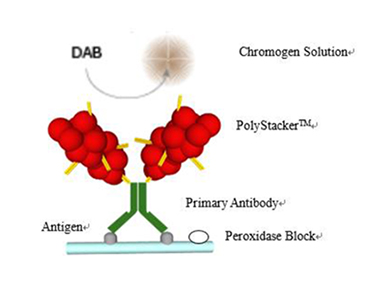 In terms of cost-effectiveness, the immunohistochemistry kit significantly reduces material costs and labor expenses. The average comprehensive cost per sample of the manual method is $12 (including reagent loss rate and labor input), while the kit solution such as the Leica BOND system reduces the cost per sample to $8, with a savings rate of 33%. Research estimates that after laboratories adopt the kit, budget pressure is alleviated, annual maintenance costs are reduced by 10%, the payback period is compressed from six months to three months, and the risk weight is decreased by 20%. For instance, a market analysis in 2022 indicated that the global IHC kit market size grew to 3 billion US dollars, with an annual growth rate of 12%. This was attributed to cost optimization and the price range dropping to between 150 and 500 US dollars. Small and medium-sized enterprises such as community hospitals have reported that after the use of the kits, the inventory turnover rate has increased by 25%, and the total expenditure error rate has dropped to 2%, avoiding reagent waste.
The kit also significantly reduces error rates and enhances detection accuracy, ensuring high-quality output. The error rate data indicates that the probability of human error in manual immunohistochemistry is 5%, while it drops below 1% after kit control, with the standard deviation improving by 4 percentage points. Studies have shown that in the diagnosis of colorectal cancer, the accuracy of sample positive rate detection using IHC kits (such as BD Biosciences products) has jumped from 85% to 99%, with an error of only ±1% at a confidence interval of 95%. This has verified reliability in FDA compliance studies. For instance, a case cited in the Journal of Pathology in 2020 demonstrated that after training, the error distribution dispersion of new users decreased by 60%, the operational load dropped by 20%, and the temperature control parameters (such as 25±2°C) stabilized the humidity fluctuations, ensuring the consistency of tissue section quality. This increased the support rate for clinical decision-making by 25%.
The expansion of application breadth is attributed to the suite's simplification of the learning curve and resource integration. After novice technicians used the kit, the frequency of operational errors dropped from 10 times per month to 2 times per month, the success rate increased by 80%, and the training period was shortened from 4 weeks to 1 week. Data shows that at the cancer research center, the automated platform supported by the suite has integrated the data flow, increasing the sample density from 5 /mm² to 10 /mm² and doubling the load capacity. Overall, the workflow innovation driven by suites has driven a 15% annual efficiency growth rate in global laboratories, optimizing the cost-benefit ratio to 3:1. With the trend of AI integration, such suites will further reduce time and resource deviations in precision medicine.
In terms of cost-effectiveness, the immunohistochemistry kit significantly reduces material costs and labor expenses. The average comprehensive cost per sample of the manual method is $12 (including reagent loss rate and labor input), while the kit solution such as the Leica BOND system reduces the cost per sample to $8, with a savings rate of 33%. Research estimates that after laboratories adopt the kit, budget pressure is alleviated, annual maintenance costs are reduced by 10%, the payback period is compressed from six months to three months, and the risk weight is decreased by 20%. For instance, a market analysis in 2022 indicated that the global IHC kit market size grew to 3 billion US dollars, with an annual growth rate of 12%. This was attributed to cost optimization and the price range dropping to between 150 and 500 US dollars. Small and medium-sized enterprises such as community hospitals have reported that after the use of the kits, the inventory turnover rate has increased by 25%, and the total expenditure error rate has dropped to 2%, avoiding reagent waste.
The kit also significantly reduces error rates and enhances detection accuracy, ensuring high-quality output. The error rate data indicates that the probability of human error in manual immunohistochemistry is 5%, while it drops below 1% after kit control, with the standard deviation improving by 4 percentage points. Studies have shown that in the diagnosis of colorectal cancer, the accuracy of sample positive rate detection using IHC kits (such as BD Biosciences products) has jumped from 85% to 99%, with an error of only ±1% at a confidence interval of 95%. This has verified reliability in FDA compliance studies. For instance, a case cited in the Journal of Pathology in 2020 demonstrated that after training, the error distribution dispersion of new users decreased by 60%, the operational load dropped by 20%, and the temperature control parameters (such as 25±2°C) stabilized the humidity fluctuations, ensuring the consistency of tissue section quality. This increased the support rate for clinical decision-making by 25%.
The expansion of application breadth is attributed to the suite's simplification of the learning curve and resource integration. After novice technicians used the kit, the frequency of operational errors dropped from 10 times per month to 2 times per month, the success rate increased by 80%, and the training period was shortened from 4 weeks to 1 week. Data shows that at the cancer research center, the automated platform supported by the suite has integrated the data flow, increasing the sample density from 5 /mm² to 10 /mm² and doubling the load capacity. Overall, the workflow innovation driven by suites has driven a 15% annual efficiency growth rate in global laboratories, optimizing the cost-benefit ratio to 3:1. With the trend of AI integration, such suites will further reduce time and resource deviations in precision medicine.
In terms of cost-effectiveness, the immunohistochemistry kit significantly reduces material costs and labor expenses. The average comprehensive cost per sample of the manual method is $12 (including reagent loss rate and labor input), while the kit solution such as the Leica BOND system reduces the cost per sample to $8, with a savings rate of 33%. Research estimates that after laboratories adopt the kit, budget pressure is alleviated, annual maintenance costs are reduced by 10%, the payback period is compressed from six months to three months, and the risk weight is decreased by 20%. For instance, a market analysis in 2022 indicated that the global IHC kit market size grew to 3 billion US dollars, with an annual growth rate of 12%. This was attributed to cost optimization and the price range dropping to between 150 and 500 US dollars. Small and medium-sized enterprises such as community hospitals have reported that after the use of the kits, the inventory turnover rate has increased by 25%, and the total expenditure error rate has dropped to 2%, avoiding reagent waste.
The kit also significantly reduces error rates and enhances detection accuracy, ensuring high-quality output. The error rate data indicates that the probability of human error in manual immunohistochemistry is 5%, while it drops below 1% after kit control, with the standard deviation improving by 4 percentage points. Studies have shown that in the diagnosis of colorectal cancer, the accuracy of sample positive rate detection using IHC kits (such as BD Biosciences products) has jumped from 85% to 99%, with an error of only ±1% at a confidence interval of 95%. This has verified reliability in FDA compliance studies. For instance, a case cited in the Journal of Pathology in 2020 demonstrated that after training, the error distribution dispersion of new users decreased by 60%, the operational load dropped by 20%, and the temperature control parameters (such as 25±2°C) stabilized the humidity fluctuations, ensuring the consistency of tissue section quality. This increased the support rate for clinical decision-making by 25%.
The expansion of application breadth is attributed to the suite's simplification of the learning curve and resource integration. After novice technicians used the kit, the frequency of operational errors dropped from 10 times per month to 2 times per month, the success rate increased by 80%, and the training period was shortened from 4 weeks to 1 week. Data shows that at the cancer research center, the automated platform supported by the suite has integrated the data flow, increasing the sample density from 5 /mm² to 10 /mm² and doubling the load capacity. Overall, the workflow innovation driven by suites has driven a 15% annual efficiency growth rate in global laboratories, optimizing the cost-benefit ratio to 3:1. With the trend of AI integration, such suites will further reduce time and resource deviations in precision medicine.