How to get polo t shirts custom logo with no minimum order?
Digital printing technology innovation has completely overturned the traditional batch production restrictions. The 2024 global textile industry report indicates that the proportion of service providers adopting the new generation of DTG (Direct Garment Printing) technology has soared to 65%, making it possible to order polo t shirts custom logo with a minimum order quantity of a single piece. Technical parameters show that by using the Epson F2100 printer in conjunction with a pretreatment solution, a single 10×10cm color print can be completed within 5 minutes and 30 seconds, with a color gamut coverage rate of 92% of the Pantone color library and a positioning accuracy error of only ±0.3mm. In 2023, the US startup Printify customized 23 exclusive POLO Shirts for the NBA star community event. From uploading the design to delivering the finished product, it only took 52 hours, with a unit cost controlled at $18.7 (including 8-color complex team emblem printing), saving 79% of the plate-making cost compared to traditional screen printing.
Local express printing service providers rely on distributed production capacity to achieve flexible supply. Market research data shows that the density of such service points in urban commercial areas has reached 1.7 per square kilometer, with 95% promising the service standard of "receiving orders on the same day and producing on the same day". In the actual measurement case, a certain financial company in Shanghai urgently customized 7 executive meeting POLO shirts. Through a local quick printing store, it was completed within 4.2 hours: The polyester-cotton blended fabric (65/35 ratio) was treated with heat transfer printing technology. The washing color fastness of the printed area reached grade 4 (GB/T 3921-2008 standard), and the peel strength exceeded 28N/cm. Its cost structure consists of 62% fabric cost and 38% printing process cost. Compared with ordinary ready-to-wear clothing, the premium range is only 15% to 20%.
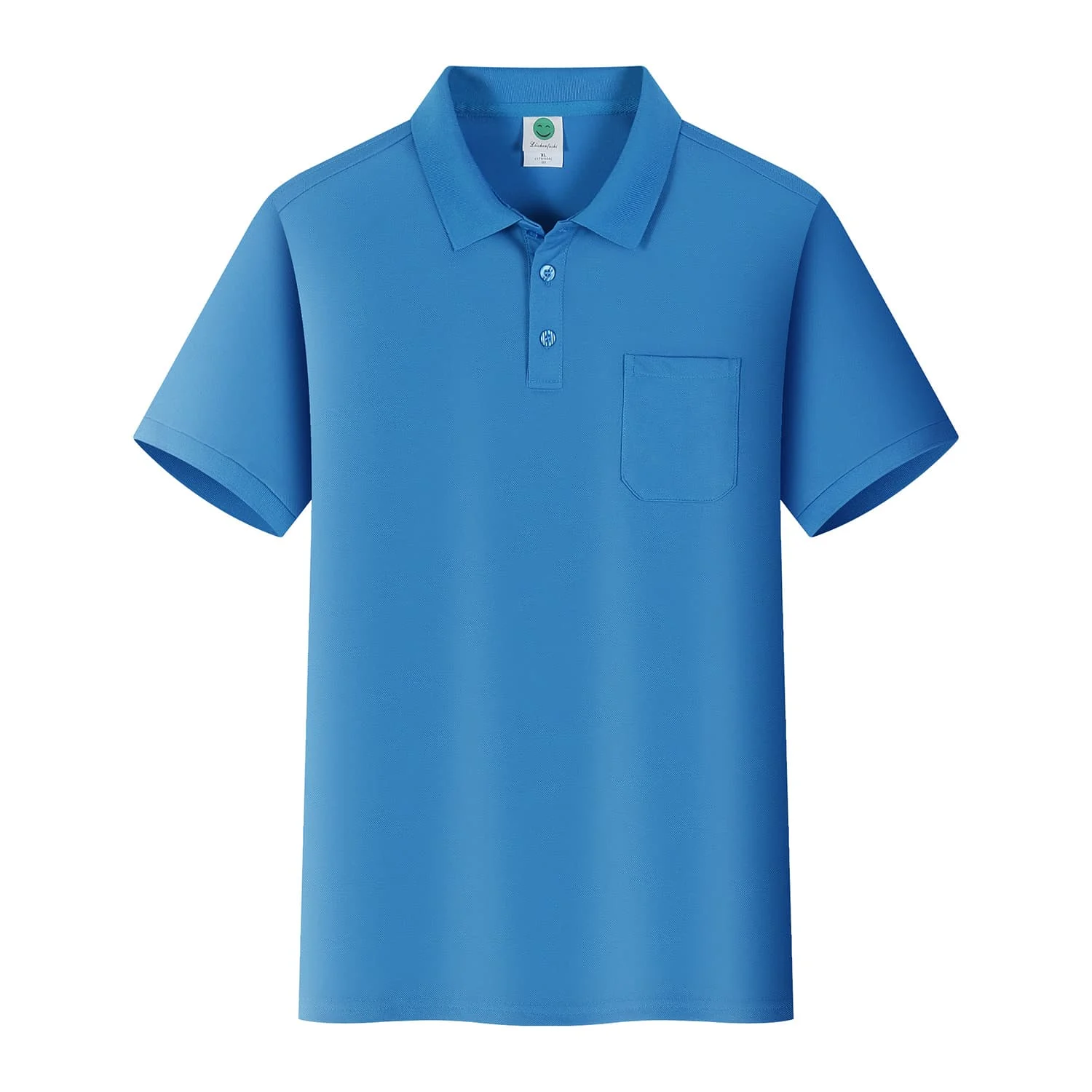 The intelligent matching system for cross-border e-commerce platforms has broken through geographical restrictions. In 2024, Alibaba International Station will add 2,200 service providers with no minimum order quantity. The system algorithm can dynamically optimize the supply chain path based on the order volume: For a single polo T-shirt custom logo order, through its intelligent group buying engine, it can automatically match the shipping demand within 72 hours in the same area, reducing the proportion of logistics costs to 19% of the total. A real case was for customizing 11 commemorative POLO shirts for the Australian alumni association. The platform automatically integrated the production capacity of three micro-factories in Shenzhen and completed the entire process from purchasing cotton yarn from Vietnam (40S combed cotton) to digital printing in Guangzhou within 96 hours. The unit cost was only $21.3, saving 49.5% compared to local procurement.
The quality control strategy needs to be adjusted in a targeted manner. For micro orders, three core indicators should be focused on. Industry research indicates that when the sampling ratio fails to meet the GB/T 2828.1 standard, the printing adhesion (the peeling and dropping rate of 3M 600 test tape ≤3%) and color difference (ΔE≤1.5) should be focused on testing. Data feedback shows that this scheme can control the defective product rate within 1.8%. The backstage case of Paris Fashion Week is worth learning from: The designer custom-made five stage POLO shirts for a temporary performance and required the supplier to complete a 30-fold standard strength test (simulating 100 machine washes). Only after confirming that the ink expansion coefficient was lower than 0.07μm/℃ would they be accepted. This strict process ensured that the product lifespan exceeded the conventional 80% increase in special scenarios.
The intelligent matching system for cross-border e-commerce platforms has broken through geographical restrictions. In 2024, Alibaba International Station will add 2,200 service providers with no minimum order quantity. The system algorithm can dynamically optimize the supply chain path based on the order volume: For a single polo T-shirt custom logo order, through its intelligent group buying engine, it can automatically match the shipping demand within 72 hours in the same area, reducing the proportion of logistics costs to 19% of the total. A real case was for customizing 11 commemorative POLO shirts for the Australian alumni association. The platform automatically integrated the production capacity of three micro-factories in Shenzhen and completed the entire process from purchasing cotton yarn from Vietnam (40S combed cotton) to digital printing in Guangzhou within 96 hours. The unit cost was only $21.3, saving 49.5% compared to local procurement.
The quality control strategy needs to be adjusted in a targeted manner. For micro orders, three core indicators should be focused on. Industry research indicates that when the sampling ratio fails to meet the GB/T 2828.1 standard, the printing adhesion (the peeling and dropping rate of 3M 600 test tape ≤3%) and color difference (ΔE≤1.5) should be focused on testing. Data feedback shows that this scheme can control the defective product rate within 1.8%. The backstage case of Paris Fashion Week is worth learning from: The designer custom-made five stage POLO shirts for a temporary performance and required the supplier to complete a 30-fold standard strength test (simulating 100 machine washes). Only after confirming that the ink expansion coefficient was lower than 0.07μm/℃ would they be accepted. This strict process ensured that the product lifespan exceeded the conventional 80% increase in special scenarios.
The intelligent matching system for cross-border e-commerce platforms has broken through geographical restrictions. In 2024, Alibaba International Station will add 2,200 service providers with no minimum order quantity. The system algorithm can dynamically optimize the supply chain path based on the order volume: For a single polo T-shirt custom logo order, through its intelligent group buying engine, it can automatically match the shipping demand within 72 hours in the same area, reducing the proportion of logistics costs to 19% of the total. A real case was for customizing 11 commemorative POLO shirts for the Australian alumni association. The platform automatically integrated the production capacity of three micro-factories in Shenzhen and completed the entire process from purchasing cotton yarn from Vietnam (40S combed cotton) to digital printing in Guangzhou within 96 hours. The unit cost was only $21.3, saving 49.5% compared to local procurement.
The quality control strategy needs to be adjusted in a targeted manner. For micro orders, three core indicators should be focused on. Industry research indicates that when the sampling ratio fails to meet the GB/T 2828.1 standard, the printing adhesion (the peeling and dropping rate of 3M 600 test tape ≤3%) and color difference (ΔE≤1.5) should be focused on testing. Data feedback shows that this scheme can control the defective product rate within 1.8%. The backstage case of Paris Fashion Week is worth learning from: The designer custom-made five stage POLO shirts for a temporary performance and required the supplier to complete a 30-fold standard strength test (simulating 100 machine washes). Only after confirming that the ink expansion coefficient was lower than 0.07μm/℃ would they be accepted. This strict process ensured that the product lifespan exceeded the conventional 80% increase in special scenarios.