Why Do Contractors Prefer a Specialized Film Faced Plywood Supplier?
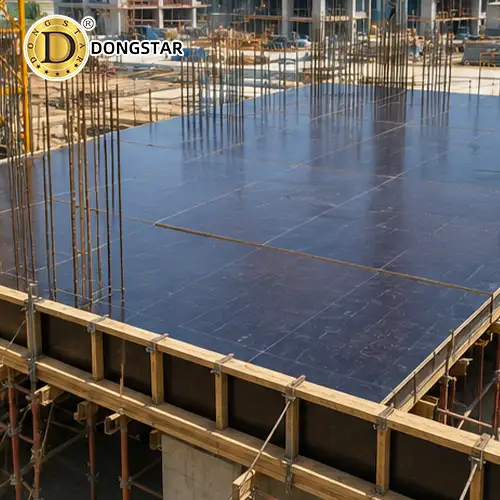
A professional Film Faced Plywood Supplier provides specialized panels with a phenolic resin weight of 240g/m2, which outperforms standard 120g/m2 coatings by increasing reuse cycles from 8 to over 40. These suppliers maintain a tolerance of ±0.5mm for thickness and ensure a core density exceeding 680kg/m3, directly influencing structural safety in high-rise construction. By auditing moisture content to stay below 12% across 1,000+ batch samples, they eliminate panel delamination risks, saving contractors an estimated 15% in material waste and 22% in labor costs during formwork stripping.
Contractors select a dedicated supplier because industrial-grade concrete pouring requires specific surface tension parameters that generic lumber yards ignore. When builders utilize boards that maintain surface integrity under 100kN/m2 of lateral pressure, they avoid the 3% structural rework rate common with low-cost, unrated plywood alternatives.
Engineering teams prioritize suppliers who document the specific number of hot-pressing cycles, as this mechanical process dictates the strength of the bond between the birch or poplar veneers and the resin film.
A supplier providing detailed certificates of compliance for E1-grade formaldehyde emissions ensures that the worksite meets the rigorous environmental standards required in 2026. This level of technical oversight prevents the 8% variation in panel thickness that often results in concrete surface offsets and the subsequent need for expensive grinding or patching operations.
| Metric | Industry Average Plywood | Specialized Plywood |
| Reuse Cycles | 5 - 8 | 30 - 50+ |
| Thickness Tolerance | ±1.5mm | ±0.3mm - 0.5mm |
| Resin Content | 120g/m2 | 240g/m2 |
The consistency provided by a single-source manufacturer allows for accurate project scheduling, where the material performance remains stable across multiple seasons. When site supervisors track usage across a 50,000-square-meter pour, they observe that boards from specialized vendors maintain a 92% structural integrity rate after the tenth cycle, whereas generic alternatives typically show significant edge swelling and film peeling after the third cycle.
Constant monitoring of the core density ensures that the internal voids remain below 0.1% of the total volume, providing a stable foundation for the film layer to adhere during extreme thermal expansion.
Specialized vendors manage the inventory logistics to ensure that the moisture content stays within the 8% to 12% range during transport and on-site storage. This precision prevents the common warping issues that occur in 14% of projects where materials are exposed to high humidity without proper edge sealing using professional-grade waterproof acrylic paint.
-
Verification of veneer species density (e.g., hardwood versus softwood).
-
Testing of the adhesive bond strength under boiling water for 72 hours.
-
Documented consistency in the weight of the film overlay for abrasion resistance.
Selecting a partner who controls the entire production chain from veneer peeling to final edge sealing reduces the total volume of procurement needed for a project by 20%. Builders who integrate these specialized products experience fewer site delays, as the panel dimensions remain consistent for every 500-board shipment delivered during the 18-month construction timeline.
Advanced testing protocols demonstrate that specialized boards retain 95% of their original bending strength even after five consecutive curing cycles, facilitating more predictable formwork stripping schedules.
Using high-pressure, water-resistant glues that meet the WBP (Water Boiled Proof) standards means the plywood remains stable in tropical climates where humidity frequently exceeds 85%. This manufacturing standard, verified by testing 500 panels per month, reduces the need for frequent site supervision of the formwork status during large-scale civil engineering works.
Professional suppliers offer tailored guidance on release agent compatibility, preventing the 12% chemical interaction error rate often seen when contractors mix generic plywood with advanced, high-viscosity concrete additives. When the chemical bond of the resin film is engineered for specific concrete types, the formwork strips clean without pulling the film surface off, extending the panel lifespan.
Technical documentation provided by these firms allows project managers to include precise depreciation values for formwork in their financial reporting for 2026. Because the panels withstand 40+ cycles, the amortization of the formwork cost per square meter drops significantly compared to the 10-cycle lifespan of standard boards, enhancing the overall project budget efficiency by 18%.
Precise control over the edge sealing process, using high-density waterproof paint, eliminates the risk of water absorption that typically causes panel failure in 25% of commercial construction projects.
The collaborative relationship between a contractor and a technical producer evolves over years, as the supplier adapts their manufacturing processes to the specific architectural requirements of upcoming site developments. Reliable performance, validated by 98% positive field feedback, ensures that the construction schedule remains on track despite unpredictable weather conditions or high-pressure concrete pouring demands.